
Water Features Built to Last on Your Land
Pond & Lake Construction in East Bernstadt for property owners who need functional water retention without future drainage failures
Coots Excavating LLC provides pond and lake construction across East Bernstadt and the surrounding rural areas, working with residential and agricultural property owners who want reliable water features that function correctly from day one. You might be planning a small farm pond for livestock, a recreational lake for family use, or a stormwater retention feature that handles runoff without eroding your land. Each project starts with a site evaluation that considers your property's natural water flow, soil composition, and long-term usability goals before the first bucket of dirt moves.
The work involves clearing the designated area, excavating to the planned depth and shape, and grading the basin to hold water without leaking or settling unevenly. Proper grading around the edges prevents erosion and ensures that water stays where it belongs, even during heavy rain. In rural land across this region, understanding how groundwater moves and where surface runoff collects makes the difference between a pond that fills naturally and one that drains into the surrounding soil. You get a water feature shaped to your property layout, built with attention to how the land behaves in wet and dry seasons.
Reach out to discuss the size, depth, and placement that will work best for your land and intended use.
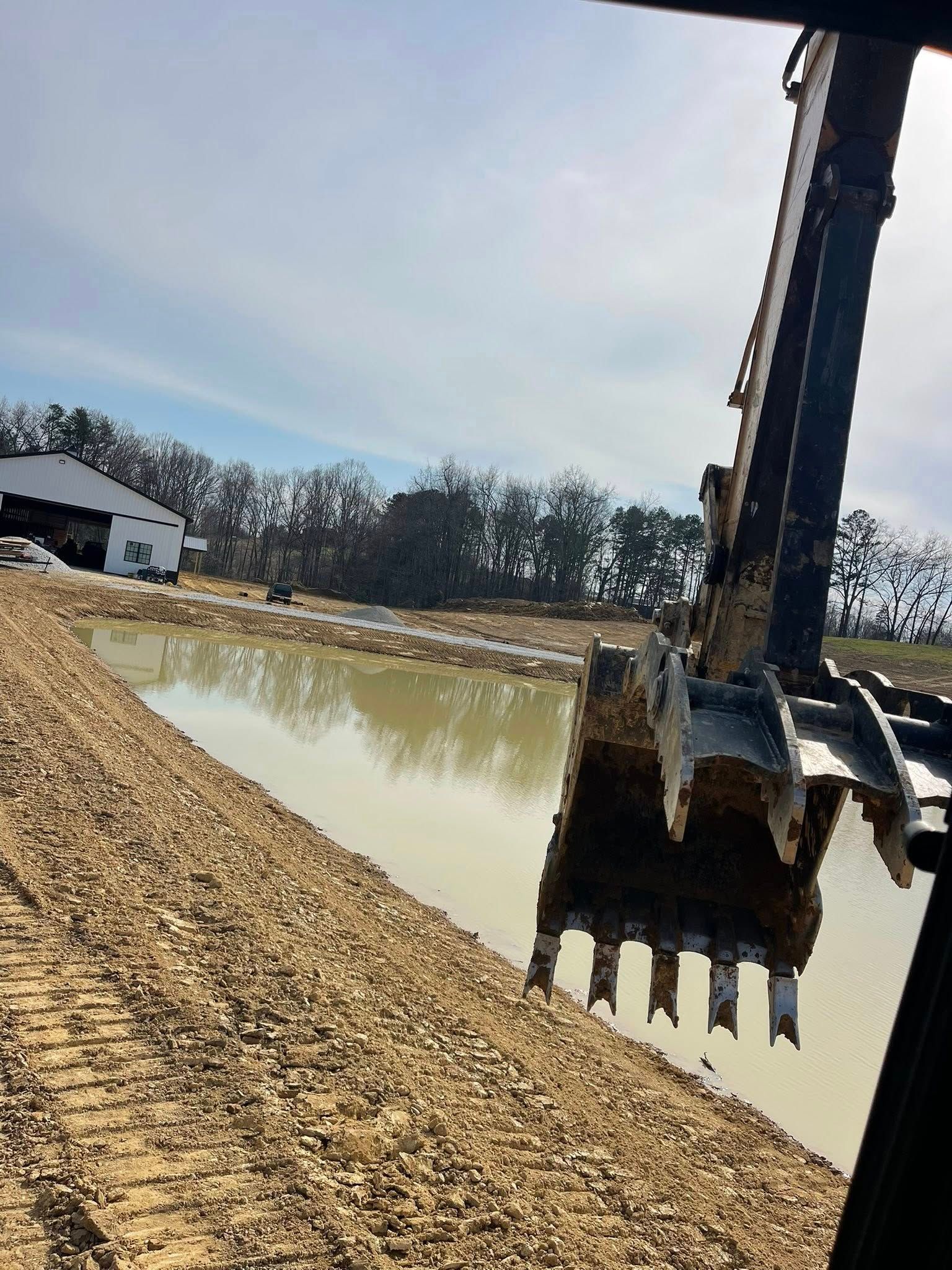
How Construction Affects Property Function and Value
You need a pond or lake that holds water year-round without requiring constant repairs or refilling. The excavation process removes soil in layers, shaping the basin so that water pressure distributes evenly and the banks remain stable. Grading equipment sets the slope and contour, while compaction work along the bottom reduces permeability in porous soils. If your land has clay content, that helps with natural sealing. If the soil drains quickly, additional steps such as clay lining or compacted fill may be necessary to prevent water loss.
After construction, you will see a water feature that fills from rainfall, springs, or runoff and maintains a consistent level without standing water creeping toward structures or roadways. Coots Excavating LLC tailors each project to the property's topography, so the finished pond integrates with the surrounding landscape rather than fighting against natural drainage patterns. Livestock access points, overflow routes, and vegetation zones are planned during the design phase to support long-term usability.
Construction timelines vary with pond size and soil conditions, but most residential projects take several days of machine work followed by settling time before the basin fills. The service does not include stocking fish, installing aeration systems, or building docks, though the site can be prepared to accommodate those additions later. Permits may be required depending on pond size and proximity to existing waterways, and those responsibilities typically fall to the property owner before excavation begins.
What to Know Before Starting Your Pond Project
Planning a pond or lake means thinking through how you will use it, how water will reach it, and what happens when it fills beyond capacity.
What size pond works best for your property?
Your acreage, intended use, and water source determine the dimensions that will function reliably without overwhelming your land or requiring excessive maintenance.
How deep should the excavation go?
Depth affects water temperature, oxygenation, and whether the pond supports fish or simply serves as a water source for livestock and wildlife.
When is the best time to excavate?
Dry seasons allow easier access and cleaner grading, while wet conditions can delay work and complicate soil compaction.
Why does grading around the pond matter?
Proper slope and drainage around the edges prevent erosion, keep sediment out of the water, and ensure that overflow moves away from structures or roadways in East Bernstadt.
What happens if the soil does not hold water naturally?
Some soils require clay lining or compacted layers to reduce seepage, and a site evaluation identifies whether your land needs additional sealing work.
Contact Coots Excavating LLC to schedule a consultation and review your property's layout, water flow, and the pond design that will serve your goals without creating future drainage problems.